
AI: The New Face of Fraud
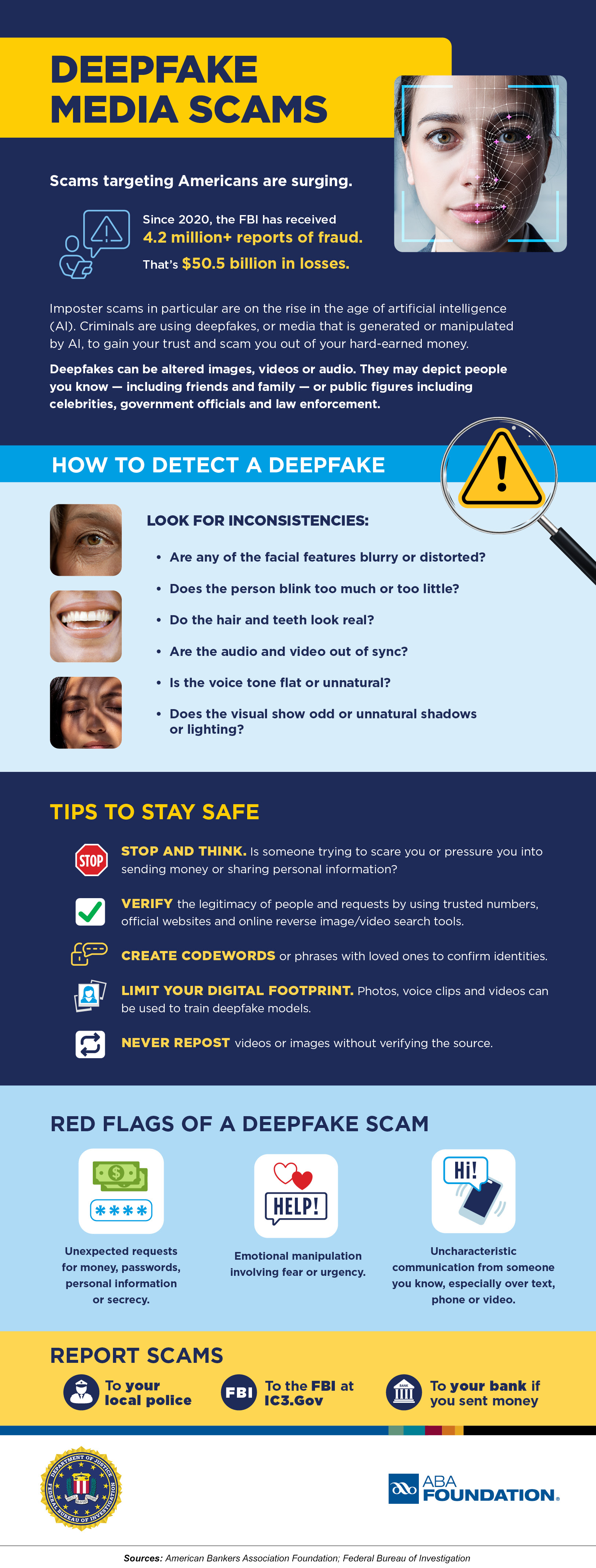
As artificial intelligence (AI) continues to evolve, so do scam tactics that exploit technology to deceive and defraud consumers. AI-generated or manipulated media, including images, videos, and audio files, can be used to impersonate trusted individuals, such as your family, friends, boss, and coworkers. Criminals might not only pose as the people close to you, but also as public officials, law enforcement, and even celebrities. By doing so, they create a sense of fear and urgency and convince victims to send money or share sensitive information.
According to the FBI, more than 4.2 million fraud reports have been filed since 2020, resulting in more than $50.5 billion in losses, with a growing portion stemming from these newer “deepfake scams” as they are called.
The American Bankers Association Foundation and the Federal Bureau of Investigation partnered recently to educate the public about this emerging threat. We encourage clients to stay informed and share what they learn with friends and family so they can spot deepfakes before they do any harm.
Key signs of deepfake media might include:
- Blurry or distorted facial features
- Unnatural blinking or facial movements
- Audio-video mismatches
- Flat or robotic voice tones
- Odd lighting or shadows
Keep in mind these actionable tips to stay safe:
- Stop and think before responding to urgent or emotional requests.
- Verify identities using trusted sources and reverse search tools.
- Create codewords with loved ones to confirm authenticity.
- Limit your digital footprint to reduce exposure.
- Report scams to the FBI at IC3.gov, The Bank, and local law enforcement.
Vigilance and awareness is key to preventing these scams and minimizing their impact.
For more fraud prevention tips and resources visit our Fraud & Security Center.